
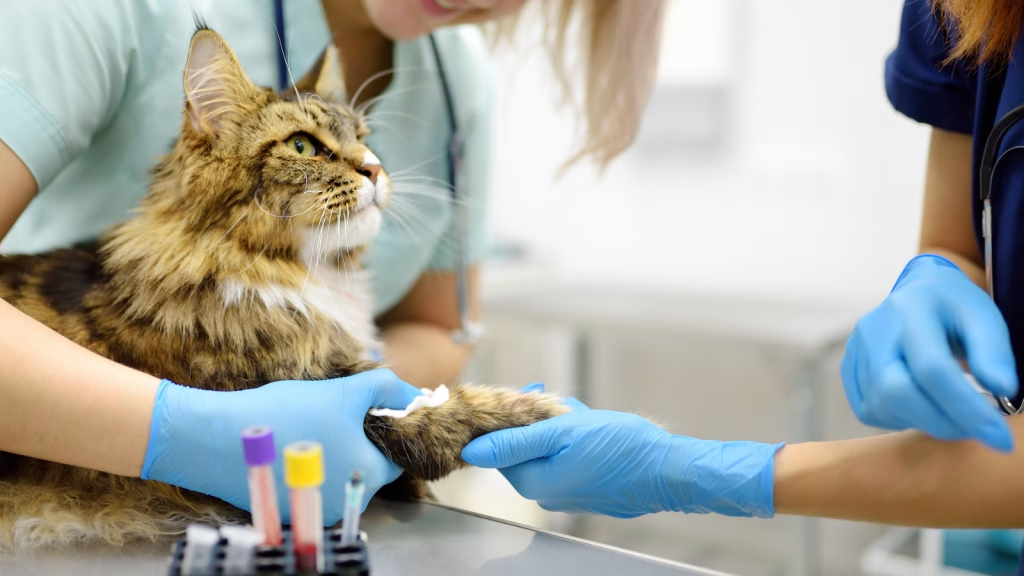
Looking for a dog X-ray in Bucharest, a cat ultrasound scan or pet blood tests with clear explanations in English?
Joyvet Veterinary Clinic provides diagnostic services for dogs and cats in Sector 3, Bucharest. Depending on your pet’s symptoms and clinical condition, the assessment may include a veterinary consultation, X-rays, focused or complete abdominal ultrasound, blood tests, urine tests and other laboratory investigations.
The purpose is not simply to produce an image or a laboratory report. Every result must be interpreted together with your pet’s symptoms, medical history, medication, physical examination and previous test results.
English-speaking support is available. Please mention that you prefer to communicate in English when booking.
Contact Joyvet Veterinary Clinic
Call: +40731803803
WhatsApp: +40731803803
Address: 68 Dumitru Papazoglu Street, Sector 3, Bucharest
Email: joyvetbucuresti@gmail.comStandard opening hours: Monday to Sunday, 09:00-21:00
Please call before travelling, particularly if your pet has urgent symptoms or requires a complete specialist ultrasound examination. Calling ahead allows the team to assess urgency, confirm availability and advise you about fasting or other preparation.
Pet diagnostics in Bucharest: what services are available?
Joyvet provides diagnostic investigations for dogs and cats with acute illness, chronic symptoms, injuries, urinary problems, digestive disorders, unexplained weight loss and other medical concerns.
The most frequently used diagnostic services include:
| Diagnostic service | What it mainly evaluates | Common reasons for using it |
| X-ray or radiography | Bones, joints, chest and general abdominal patterns | Limping, trauma, coughing, breathing problems, constipation, swallowed objects or some urinary stones |
| Abdominal ultrasound | Soft tissues and abdominal organs in real time | Vomiting, diarrhoea, abdominal pain, weight loss, urinary changes, liver or kidney abnormalities |
| Focused POCUS ultrasound | Rapid, targeted assessment | Trauma, suspected internal fluid, unstable patients or urgent abdominal and thoracic evaluation |
| Complete blood count, or CBC | Red blood cells, white blood cells and platelets | Anaemia, inflammation, infection patterns, bleeding concerns or general illness |
| Blood biochemistry | Organ-related and metabolic markers | Kidney, liver, glucose, protein and electrolyte abnormalities |
| Urinalysis | Urine concentration, sediment, crystals and other changes | Increased drinking, frequent urination, blood in urine, urinary pain or kidney concerns |
| Rapid and specialised tests | Specific infectious, hormonal, coagulation or other abnormalities | Selected according to symptoms, age, exposure and medical history |
The appropriate test is selected after the veterinarian examines your pet. The same symptom can have several very different causes, so requesting a specific investigation without clinical evaluation may lead to an incomplete or misleading answer.
X-ray, ultrasound or blood tests: which one does my pet need?
X-rays, ultrasound scans and blood tests answer different clinical questions. They are complementary rather than interchangeable.
An X-ray is particularly useful when the veterinarian needs to evaluate bones, joints, the spine, the chest or the overall position, size and density of internal structures. It may also reveal some swallowed objects, severe constipation, certain bladder stones or indirect signs of intestinal obstruction.
An ultrasound is more useful for examining soft tissues and abdominal organs. It allows the veterinarian to assess structures such as the liver, gallbladder, spleen, kidneys, urinary bladder, uterus, prostate, lymph nodes and parts of the gastrointestinal tract in real time.
Blood tests do not create an image. Instead, they provide information about blood cells, metabolism, hydration and organ-related markers. Blood tests may show that an internal problem exists even when the animal’s appearance or imaging findings are not yet conclusive.
Each method also has limitations. Not every foreign body is visible on an X-ray. Ultrasound cannot evaluate structures hidden behind bone or gas as effectively, and its accuracy depends on examination quality and interpretation. Abnormal blood results may identify the effect of a disease without showing its exact anatomical cause.
For this reason, a dog with repeated vomiting may require blood tests and an abdominal ultrasound, while an X-ray may also be recommended if intestinal obstruction is suspected.
Dog X-Ray in Bucharest
A dog X-ray in Bucharest may be recommended when a dog is limping, has suffered an accident, is showing signs of pain or has respiratory, digestive or urinary symptoms that require further investigation.
When does a dog need an X-ray?
Common indications include:
- limping or refusing to place weight on a leg;
- suspected fractures, dislocations or joint disease;
- pain after a fall, collision or other trauma;
- persistent coughing or difficult breathing;
- suspected changes involving the heart, lungs or chest cavity;
- severe constipation or abdominal enlargement;
- possible ingestion of a bone, toy or another foreign object;
- suspected intestinal obstruction;
- some types of bladder or urinary stones;
- monitoring of a previously diagnosed orthopaedic or thoracic condition.
Radiographs may also be recommended before certain procedures or as part of cancer staging, depending on the individual case.
What happens during a dog X-ray?
The visit normally begins with a medical history and physical examination. The veterinarian evaluates the painful or affected area and decides which radiographic views are required.
A single image is not always sufficient. Orthopaedic, chest and abdominal examinations frequently require two or more views taken from different positions. This provides more reliable information than trying to interpret a three-dimensional structure from only one angle.
The dog must remain correctly positioned for a brief period while the image is obtained. The X-ray itself is not painful, but positioning may be uncomfortable when the dog has a fracture, severe arthritis, spinal pain or abdominal tenderness.
Will my dog need sedation for an X-ray?
Not every dog requires sedation.
A calm dog that can remain in the required position may be examined using gentle restraint. Sedation may be recommended when the dog is:
- very anxious or reactive;
- in significant pain;
- unable to remain still;
- too large or difficult to position safely;
- undergoing an examination that requires precise positioning or muscle relaxation.
Sedation is not used merely for convenience. In selected patients, it reduces stress, limits repeated manipulation and helps obtain diagnostically useful images.
Because sedation may occasionally be required, ask when booking whether your dog should avoid food before the appointment. Do not apply a standard fasting rule without confirmation, particularly for puppies, diabetic dogs, debilitated patients or animals receiving regular medication.
Cat X-Ray in Bucharest
A cat X-ray in Bucharest may be needed after a fall, when a cat stops jumping, develops breathing difficulties, has severe constipation or shows urinary or digestive symptoms.
Cats frequently hide pain. A cat with an injury may not cry or limp dramatically. Instead, it may hide, stop jumping onto furniture, avoid being touched, sleep more, use the litter tray differently or become unusually quiet.
Cat X-rays after a fall from a balcony or window
Cats living in Bucharest apartments may be injured after falling from a balcony, window, cupboard or other elevated surface.
Even when the cat initially appears able to walk, a veterinary examination may be necessary. Injuries involving the chest, limbs, jaw or internal organs are not always immediately obvious.
Contact the clinic promptly if the cat has:
- rapid or difficult breathing;
- open-mouth breathing;
- weakness or collapse;
- an abnormal gait;
- visible pain;
- bleeding;
- pale or bluish gums;
- reluctance to move;
- severe lethargy after the fall.
A cat with breathing difficulties may need oxygen and stabilisation before it can be positioned safely for an X-ray.
Cat X-rays for constipation and urinary problems
Abdominal radiographs can help assess severe constipation and suspected megacolon by showing how much faecal material is present and whether the colon is significantly enlarged.
X-rays may also identify some radiopaque urinary stones. However, not all urinary stones are visible on radiographs, so ultrasound and urinalysis may also be necessary.
A male cat that repeatedly enters the litter tray but produces little or no urine may have a urinary obstruction. This is a medical emergency. Do not wait for a routine X-ray appointment; call the clinic immediately.
Does a cat need sedation for an X-ray?
Some cats remain still with calm, gentle handling. Others may require sedation because they are frightened, painful or unable to tolerate the required position.
The veterinarian will consider the cat’s breathing, general condition, age and medical risks before recommending sedation. In an unstable patient, stabilisation takes priority over obtaining an image immediately.
Pet Ultrasound in Bucharest
A pet ultrasound in Bucharest may be recommended when a dog or cat has persistent digestive symptoms, abdominal pain, urinary changes, unexplained weight loss or abnormalities found during blood testing.
Ultrasound uses high-frequency sound waves to create real-time images of soft tissues. It does not use ionising radiation.
During an abdominal ultrasound, the veterinarian can assess the appearance, size, position and internal structure of several organs. Ultrasound may identify free abdominal fluid, organ enlargement, wall thickening, changes in tissue structure, masses, urinary abnormalities or reproductive disease.
An ultrasound finding is not always a final diagnosis. Some abnormalities require blood tests, urine tests, a needle sample, cytology, biopsy, radiographs, repeat imaging or clinical monitoring.
Dog Abdominal Ultrasound in Bucharest
A dog abdominal ultrasound may be recommended for:
- repeated or persistent vomiting;
- chronic diarrhoea;
- loss of appetite;
- unexplained weight loss;
- abdominal pain or enlargement;
- abnormal liver or kidney blood results;
- increased drinking or urination;
- blood in the urine;
- suspected bladder, kidney or prostate disease;
- suspected pancreatitis;
- abdominal masses or free fluid;
- an intact female dog with possible pyometra;
- pregnancy assessment;
- monitoring of a known abdominal condition.
For an unspayed female dog, lethargy, increased thirst, loss of appetite, vomiting or vaginal discharge may raise concern about pyometra. Some dogs with a closed pyometra have no visible discharge. Ultrasound can be an important part of the urgent assessment, but the veterinarian must also evaluate the dog’s general condition and blood results.
Cat Abdominal Ultrasound in Bucharest
A cat abdominal ultrasound is commonly considered for cats with:
- chronic vomiting or diarrhoea;
- reduced appetite;
- progressive weight loss;
- increased thirst or urination;
- recurrent urinary symptoms;
- blood in the urine;
- abnormal kidney, liver or thyroid-related test results;
- suspected intestinal, pancreatic or hepatic disease;
- abdominal pain;
- suspected masses or fluid;
- reproductive tract abnormalities.
Cats with chronic disease may initially show only subtle behavioural changes. A cat may sleep more, eat slightly less, stop grooming normally or gradually lose weight before obvious illness develops.
Ultrasound can provide important structural information, but it cannot always distinguish inflammation from cancer or other infiltrative diseases based on appearance alone. Sampling or additional testing may be necessary.
Focused POCUS ultrasound versus a complete abdominal ultrasound
Not every ultrasound examination has the same purpose.
A focused POCUS examination, including AFAST or TFAST techniques, is a rapid and targeted assessment. It is often used in emergency or unstable patients to look for findings such as free fluid or selected thoracic and abdominal abnormalities.
A complete specialist abdominal ultrasound is a more extensive and systematic examination. It takes more time and may include detailed evaluation and measurements of multiple organs.
A focused scan should not automatically be considered a replacement for a complete abdominal study. The veterinarian selects the examination according to the clinical question and the urgency of the patient.
A heart ultrasound, also called an echocardiogram, is a separate cardiology examination and is not the same as a routine abdominal ultrasound.
How should I prepare my pet for an ultrasound?
Preparation depends on the reason for the examination and your pet’s medical condition.
For some abdominal scans, fasting may improve visualisation by reducing stomach contents and intestinal gas. However, fasting is not appropriate for every patient. Puppies, kittens, diabetic animals, severely ill pets and animals taking medication may require different instructions.
For urinary tract imaging, the veterinarian may prefer the bladder not to be completely empty. Do not deliberately restrict water or prevent urination unless the clinic gives you specific instructions.
A small area of abdominal fur will usually need to be clipped. Hair traps air between the probe and skin, which reduces image quality. Ultrasound gel is then applied to allow proper contact.
Most abdominal ultrasound examinations can be performed while the animal is awake. Sedation may occasionally be needed for a severely anxious, painful or reactive patient, or for an ultrasound-guided sampling procedure.
Pet Blood Tests in Bucharest
Joyvet provides pet blood tests in Bucharest for dogs and cats with illness, chronic disease, unexplained symptoms, pre-anaesthetic requirements or preventive monitoring needs.
Blood tests are most useful when they are selected and interpreted in relation to the patient. A large panel is not automatically better than a smaller, clinically appropriate set of tests.
Complete blood count for dogs and cats
A complete blood count, commonly abbreviated as CBC, evaluates the major blood cell groups:
- red blood cells;
- white blood cells;
- platelets.
Red blood cell results help identify and characterise anaemia or changes associated with dehydration. White blood cell patterns may support the assessment of inflammation, infection, stress responses or other systemic disease. Platelet results contribute to the evaluation of blood clotting risk.
An abnormal CBC value is not a diagnosis by itself. For example, an increased white blood cell count does not automatically prove a bacterial infection, and a low platelet result may require confirmation. In cats, platelets can clump inside the sample and create an artificially low automated result, so microscopic review may sometimes be required.
Blood biochemistry for dogs and cats
Blood biochemistry measures selected markers associated with organs and metabolism.
Depending on the panel, it may include:
- kidney-related markers;
- liver enzymes and other hepatobiliary markers;
- blood glucose;
- proteins;
- electrolytes;
- calcium or phosphorus;
- pancreatic or other specialised markers.
Biochemistry results help the veterinarian determine whether additional testing is needed. Abnormal liver-related values may lead to an abdominal ultrasound. Kidney-related changes may require urinalysis, blood pressure measurement and follow-up testing. Electrolyte abnormalities may influence fluid therapy and the urgency of treatment.
Pre-anaesthetic blood tests
Blood tests may be recommended before surgery, dental cleaning, endoscopy or another procedure requiring sedation or anaesthesia.
Pre-anaesthetic testing helps identify abnormalities that may influence:
- anaesthetic risk;
- medication choice;
- fluid therapy;
- procedure timing;
- monitoring requirements;
- whether further investigation or stabilisation is necessary.
Normal blood results cannot guarantee that an anaesthetic complication will not occur. They are one part of the pre-anaesthetic evaluation, together with the physical examination, medical history, age and known diseases.
For one common planned procedure, see how spaying and neutering appointments are prepared.
Blood tests for senior dogs and cats
Senior pets may develop kidney, liver, endocrine or inflammatory disease before obvious symptoms appear.
Testing may be considered when an older dog or cat:
- drinks more water;
- urinates more frequently;
- loses weight;
- eats more or less than usual;
- becomes less active;
- vomits intermittently;
- develops changes in coat quality or behaviour;
- requires long-term medication;
- is preparing for anaesthesia.
There is no single blood-test schedule that is appropriate for every senior animal. The veterinarian considers species, age, breed, previous results, medication and existing health conditions.
Additional veterinary laboratory tests
Depending on the case, Joyvet may also recommend:
- urinalysis and urinary sediment examination;
- blood smears for haemoparasites;
- electrolyte testing;
- thyroid testing;
- SDMA testing;
- coagulation tests;
- rapid infectious-disease tests;
- faecal parasite examination;
- blood typing;
- cytology;
- bacteriology or mycology;
- histopathology;
- tests performed through an external laboratory.
Some common investigations can be performed in the clinic. Other specialised samples must be sent to an external laboratory, so turnaround times vary.
Does my pet need to fast before blood tests?
Some biochemistry tests are easier to interpret after an appropriate fasting period because recent food intake may alter or interfere with selected measurements.
However, not every blood test requires fasting, and an urgent examination should not be delayed simply because the animal has eaten.
Ask the clinic for individual instructions. Do not stop regular medication unless the veterinarian specifically tells you to do so. Bring a written list of all medicines and supplements, including the dose and time of the last administration.
Why are X-rays, ultrasound and blood tests sometimes combined?
One test may reveal that a problem exists, while another helps identify its location or severity.
| Clinical situation | Investigations that may be combined |
| Repeated vomiting | Blood tests, abdominal ultrasound and sometimes X-rays |
| Suspected intestinal obstruction | X-rays, ultrasound, blood tests and electrolyte assessment |
| Urinary pain or blood in urine | Urinalysis, ultrasound, blood tests and sometimes X-rays |
| Trauma or fall | Physical examination, X-rays, focused POCUS and blood tests |
| Unexplained weight loss | CBC, biochemistry, urinalysis and abdominal ultrasound |
| Abnormal liver values | Repeat or extended blood tests and abdominal ultrasound |
| Suspected kidney disease | Blood tests, urinalysis, blood pressure assessment and ultrasound |
| Pre-anaesthetic assessment | Physical examination, CBC, biochemistry and additional tests according to risk |
| Suspected abdominal mass | Ultrasound, blood tests and possible ultrasound-guided sampling |
The veterinarian will explain which investigations are essential immediately, which can be performed later and which may not be necessary.
What happens during a diagnostic appointment at Joyvet?
The appointment begins with a discussion about your pet’s symptoms and medical history. The veterinarian may ask:
- when the problem began;
- how the symptoms have changed;
- whether the pet is eating and drinking;
- whether vomiting or diarrhoea is present;
- whether urination or defecation has changed;
- whether there was trauma or access to a foreign object;
- what medication has already been given;
- whether similar episodes have occurred before.
A physical examination follows. Depending on the clinical problem, the veterinarian evaluates hydration, mucous membranes, temperature, heart and respiratory rate, abdominal comfort, painful limbs or other relevant areas.
After the examination, the veterinarian recommends an investigation plan and explains the purpose of each test. When appropriate and available, several investigations may be performed during the same visit.
The results are then interpreted together. You should leave with an explanation of what has been found, what remains uncertain and what the next medical steps are.
What should foreign pet owners bring to the clinic?
Bring any available medical records, even when they were issued outside Romania.
Useful information includes:
- previous blood-test reports;
- X-ray or ultrasound reports and images;
- hospital discharge documents;
- vaccination booklet or EU pet passport;
- current medication and supplement list;
- known allergies or previous anaesthetic reactions;
- information about recent travel;
- photographs or videos of intermittent symptoms;
- the date and time of the pet’s last meal, water intake, urination and defecation.
Medical documents in English are welcome. If the report is in another language, the numerical values, images and medication names may still be useful.
Learn more about our English-speaking veterinary clinic in Bucharest.
When is diagnostic testing urgent?
Call Joyvet immediately rather than waiting for a routine appointment when your dog or cat has:
- difficult, rapid or open-mouth breathing;
- collapse, severe weakness or inability to stand;
- pale, white, blue or yellow gums;
- major trauma or a fall from height;
- uncontrolled bleeding;
- repeated vomiting or inability to keep water down;
- a swollen, painful abdomen;
- severe bloody diarrhoea;
- inability to urinate;
- seizures or marked confusion;
- suspected poisoning;
- suspected ingestion of a needle, string, bone, toy or other foreign object;
- severe pain or rapidly worsening general condition.
In critical patients, stabilisation may be more important than obtaining an X-ray or ultrasound immediately. Oxygen, intravenous access, pain relief or other emergency measures may be required before diagnostic positioning is safe.
Pet X-ray, ultrasound and blood-test prices in Bucharest
The following prices are a concise guide. The total cost depends on the consultation, number of X-ray exposures, type of ultrasound, selected laboratory panel, need for sedation and any treatment required.
| Service | Current listed price |
| Standard consultation, Monday-Friday, 09:00-21:00 | 150 RON |
| Weekend or public-holiday consultation, 09:00-21:00 | 200 RON |
| X-ray, per exposure | 150 RON |
| Focused AFAST, TFAST or POCUS ultrasound | 150 RON |
| Complete specialist abdominal ultrasound | 300 RON |
| Complete ultrasound for a large dog or patient requiring additional handling | 400 RON |
| Standard ultrasound recheck | 100 RON |
| Complete blood count, CBC | 150 RON |
| Pre-operative blood-test package | 300 RON |
| Nine-parameter blood biochemistry panel | 250 RON |
| Thirteen-parameter blood biochemistry panel | 300 RON |
| Electrolytes: sodium, potassium and chloride | 150 RON |
| Urinalysis and urinary sediment | 150 RON |
| Simple rapid test | 95 RON |
An X-ray is charged per exposure. When two views are required, the radiography component will normally consist of two exposures.
Consultation, medication, sedation, additional handling, external laboratory testing and treatment are charged separately when required. Please confirm current prices when booking.
Why choose Joyvet for pet diagnostics in Bucharest?
Joyvet offers a coordinated diagnostic pathway for dogs and cats in Sector 3.
Instead of treating an X-ray, ultrasound scan or blood report as an isolated service, the veterinarian considers:
- your pet’s symptoms and history;
- the physical examination;
- current and previous test results;
- medication already administered;
- the urgency of the condition;
- the safest and most useful next step.
Where clinically appropriate, consultation, imaging, laboratory testing, treatment and follow-up can be coordinated through the same clinic.
For international residents, expats and visitors, English-speaking support helps ensure that you understand the suspected diagnosis, available options, costs, medication instructions and follow-up plan.
Frequently asked questions
Where can I get a dog X-ray in Bucharest?
Joyvet Veterinary Clinic provides dog X-rays at 68 Dumitru Papazoglu Street, Sector 3, Bucharest. Call or WhatsApp +40 731 803 803 before travelling so the team can assess urgency and confirm availability.
How much does a dog or cat X-ray cost?
An X-ray costs 150 RON per exposure. When two views are required, two exposures will normally cost 300 RON. Consultation, sedation and additional investigations are not included in the exposure price.
Does my pet need sedation for an X-ray?
Not necessarily. Many dogs and cats can be positioned using gentle restraint. Sedation may be recommended for painful, highly anxious or reactive patients, or when precise positioning cannot otherwise be achieved safely.
Is an X-ray painful for a dog or cat?
The X-ray exposure itself is not painful. Positioning may cause discomfort when the animal has a fracture, joint disease, spinal pain or abdominal tenderness. The veterinarian adapts handling and may recommend sedation when appropriate.
Are veterinary X-rays safe?
Radiography uses ionising radiation. The veterinarian limits the number of exposures to those that are medically justified and selects the required views according to the clinical problem.
How much does a pet ultrasound cost in Bucharest?
A focused AFAST, TFAST or POCUS examination costs 150 RON. A complete specialist abdominal ultrasound costs 300 RON. The listed price is 400 RON for a large dog or a patient requiring additional handling.
Is an abdominal ultrasound painful?
The ultrasound itself is non-invasive and is usually well tolerated. A painful animal may be uncomfortable while lying in position, and the clipped area or cool ultrasound gel may feel unfamiliar.
Will my dog or cat need to be shaved for an ultrasound?
A section of abdominal fur will usually be clipped because air trapped in the coat interferes with ultrasound imaging. The hair grows back after the examination.
Should my pet fast before an ultrasound or blood test?
Possibly, but preparation depends on the investigation and the patient’s health. Confirm instructions when booking. Do not automatically fast a puppy, kitten, diabetic or seriously ill animal.
Is an abdominal ultrasound the same as a heart ultrasound?
No. An abdominal ultrasound evaluates abdominal organs. A heart ultrasound, or echocardiogram, is a separate cardiology examination.
How much does a pet blood test cost?
A complete blood count costs 150 RON. A pre-operative package costs 300 RON. Biochemistry panels and specialised tests have different prices depending on the number and type of parameters required.
How quickly will I receive the results?
X-ray and ultrasound findings are commonly discussed during the appointment. Some in-clinic laboratory tests may also be available during the visit. Specialised tests sent to an external laboratory take longer.
Can all diagnostic tests be performed during one appointment?
Several tests may be performed during the same visit when clinically appropriate and available. The exact plan depends on your pet’s condition, the required preparation, specialist availability and whether samples must be sent externally.
Can I bring results from another veterinary clinic or another country?
Yes. Bring previous reports, images, laboratory results, discharge documents and medication details. Comparing current and previous findings can be very useful, particularly for chronic disease.
Does Joyvet provide veterinary care in English?
English-speaking support is available. Mention your language preference when booking so the clinic can plan the appointment accordingly.
Book pet diagnostic testing in Bucharest
Contact Joyvet when your dog or cat needs an X-ray, abdominal ultrasound, blood tests or a complete diagnostic assessment.
Call: +40731803803
WhatsApp: +40731803803
Address: 68 Dumitru Papazoglu Street, Sector 3, Bucharest
Email: joyvetbucuresti@gmail.com
Standard opening hours: Monday to Sunday, 09:00-21:00
When contacting the clinic, provide your pet’s species, age, approximate weight, symptoms, how long the problem has been present and whether the animal has recently eaten. This helps the team assess urgency and give you the correct preparation instructions.