
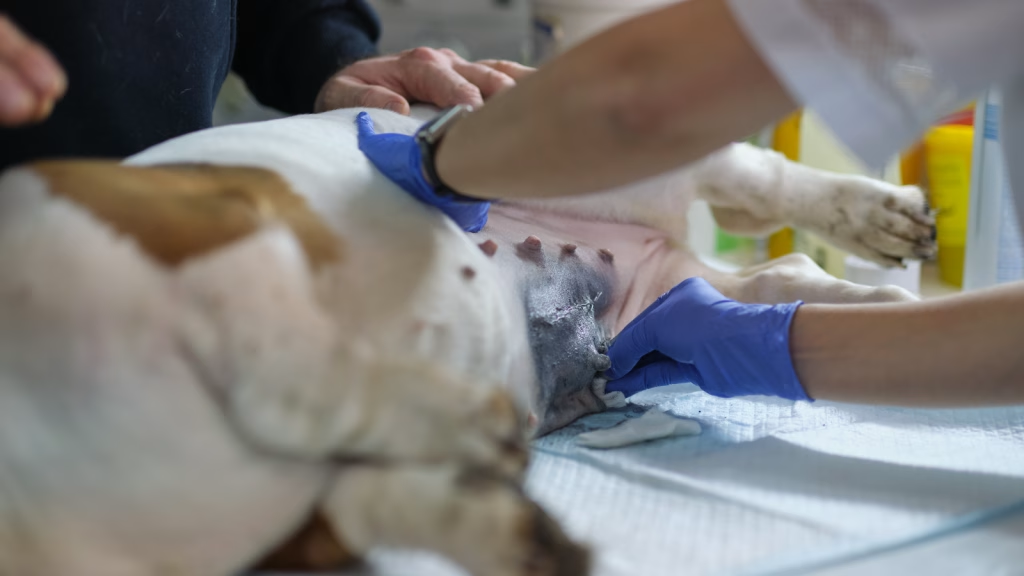
Spaying and neutering dogs in Bucharest is a common veterinary procedure, but deciding when and how it should be done deserves an individual approach. For female dogs, spaying prevents unwanted pregnancies and eliminates the risk of serious reproductive conditions such as pyometra, while neutering male dogs prevents reproduction and can be recommended for certain testicular, prostatic or hormone-related conditions. The ideal timing is not necessarily the same for every dog and may depend on age, breed, adult size, sex, health status and lifestyle.
At Joyvet Veterinary Clinic in Sector 3, Bucharest, both female dog spaying and male dog neutering are planned after a veterinary assessment. Before surgery, we evaluate your dog’s general health, discuss medical history and anaesthetic considerations, and recommend pre-operative blood tests or additional investigations when appropriate. The procedure is performed under general anaesthesia, followed by postoperative monitoring and clear instructions for recovery at home.
In this guide, you will find practical information about dog spay and neutering costs in Bucharest, the differences between spaying a female dog and neutering a male dog, the best age for surgery, preparation before anaesthesia, possible benefits and risks, recovery after the procedure, and situations such as a dog being in heat, pregnancy, pyometra or a retained testicle. The aim is to help you understand what to expect and make an informed decision together with your veterinarian.
Spaying and neutering at Joyvet: key information
Joyvet is located at 68 Dumitru Papazoglu Street, Sector 3, Bucharest. The clinic can be contacted by telephone or WhatsApp at +40 731 803 803. Standard opening hours are Monday to Sunday, from 09:00 to 21:00, although planned operations must be booked in advance.
Current routine prices are:
| Procedure | Current Joyvet price |
| Male cat neutering | 400 RON |
| Female cat spay | 600 RON |
| Male dog neutering under 10 kg | 650 RON |
| Male dog neutering, 10-20 kg | 850 RON |
| Male dog neutering, 20-30 kg | 1,050 RON |
| Male dog neutering, 30-40 kg | 1,250 RON |
| Male dog neutering over 40 kg | 1,500 RON |
| Female dog spay under 10 kg | 900 RON |
| Female dog spay, 10-20 kg | 1,100 RON |
| Female dog spay, 20-30 kg | 1,300 RON |
| Female dog spay, 30-40 kg | 1,500 RON |
| Female dog spay over 40 kg | 1,800-1,900 RON |
These routine surgical prices currently include inhalation anaesthesia and treatment administered on the day of surgery. Pre-operative blood tests, additional investigations, special anaesthetic requirements and treatment for an existing medical problem may be charged separately. Prices should always be confirmed when booking because the final estimate depends on the individual patient.
Prices checked on 27 August 2026. RON is the international currency code for Romanian lei.
What do spay, neuter, sterilisation and castration mean?
The following vocabulary will help you understand Romanian veterinary pages, estimates and appointment instructions.
| English expression | Romanian expression | Meaning |
| Female dog spay | sterilizare cățea / sterilizare câine femelă | Surgical removal of the ovaries, sometimes together with the uterus |
| Male dog neutering or castration | castrare câine mascul | Surgical removal of the testicles |
| Female cat spay | sterilizare pisică | Surgical removal of the ovaries, sometimes together with the uterus |
| Male cat neutering or castration | castrare motan | Surgical removal of the testicles |
| Pre-operative blood tests | analize preoperatorii | Blood tests performed to assess health and anaesthetic risk |
| Health booklet | carnet de sănătate | Romanian record of vaccinations, parasite treatment and medical care |
| Pet passport | pașaport pentru animale | EU-format document used for international pet travel |
| Protective collar | guler de protecție / guler elisabetan | Collar used to prevent licking of the surgical wound |
For females, the operation may be an ovariectomy, in which the ovaries are removed, or an ovariohysterectomy, in which the ovaries and uterus are removed. The appropriate technique depends on the patient, reproductive history, clinical findings and the surgeon’s assessment.
For males, the procedure is an orchiectomy, commonly called castration or neutering. Male cat surgery is generally shorter and less invasive than female cat spaying because the testicles are external and the abdomen does not normally need to be opened.
Dog spay in Bucharest: female dog sterilisation
A female dog spay is a planned abdominal operation that prevents pregnancy and stops future heat cycles when the ovaries are removed. It can also prevent pyometra, a potentially life-threatening uterine infection, and other diseases of the ovaries or uterus, depending on the procedure performed and the dog’s existing reproductive health.
Timing matters. The decision should consider:
- the dog’s age and projected adult size;
- breed-related orthopaedic or medical risks;
- whether she has already experienced a heat cycle;
- the date of her most recent heat;
- the likelihood of accidental mating;
- her medical history and current health;
- the owner’s ability to prevent an unwanted pregnancy.
A routine spay in a young, healthy dog is different from surgery in a dog that is currently in heat, pregnant, overweight, elderly or suspected of having pyometra. Joyvet’s service page therefore presents female dog sterilisation as an individually planned medical procedure rather than an identical operation for every patient.
Dog neutering in Bucharest: male dog castration
Male dog neutering involves the surgical removal of both testicles under general anaesthesia. It prevents reproduction and eliminates the possibility of testicular disease. It may also be recommended for certain hormone-dependent conditions, including benign prostatic enlargement, some perianal diseases and retained testicles.
Neutering can reduce behaviours that are directly influenced by testosterone, such as:
- intense sexual interest in females in heat;
- roaming or attempting to escape;
- persistent mounting;
- some forms of urine marking;
- some competitive behaviour between male dogs.
However, neutering is not a universal treatment for aggression or anxiety. Fear-related aggression, pain-related aggression, resource guarding, separation anxiety, poor socialisation and learned behaviour usually require a separate medical and behavioural assessment. Joyvet’s current male-dog service page explicitly distinguishes hormone-related behaviour from fear, anxiety, pain and other non-hormonal causes.
International guidelines also emphasise that behavioural changes are difficult to predict for an individual dog and that not every aggressive behaviour is driven by testosterone.
Cat spay in Bucharest: female cat sterilisation
A female cat spay usually involves removing the ovaries, with or without the uterus, under general anaesthesia. The procedure prevents pregnancy and stops repeated heat cycles.
An unspayed indoor cat may still experience frequent heat-related behaviours, including:
- intense vocalisation;
- restlessness;
- rolling and characteristic postures;
- attempts to escape through doors or windows;
- reduced appetite;
- increased attention-seeking;
- stress in multi-cat households.
Being an indoor cat does not prevent hormonal cycles or eliminate the possibility of escape and accidental mating. Spaying also prevents ovarian disease and, when the reproductive tract is appropriately managed, prevents pyometra.
A cat that is currently in heat, may be pregnant, has recently been adopted or has an unknown medical history should be assessed before surgery. The operation may still be possible, but its timing, complexity and cost can differ from those of a routine elective spay.
Cat neutering in Bucharest: male cat castration
Male cat neutering involves removing both testicles under general anaesthesia. The operation is usually shorter than a female cat spay, although anaesthetic assessment, pain management and postoperative monitoring remain important.
Neutering may reduce:
- strong-smelling urine;
- spraying on walls, doors and furniture;
- attempts to escape in search of females;
- roaming;
- fighting with other male cats;
- mating-related injuries.
Results are not identical in every cat. Urine marking may persist when it has become an established habit or when stress, litter-box problems, conflict between cats or urinary disease are also present.
Urinating outside the litter tray should therefore not automatically be interpreted as a reason for neutering. Straining, repeated visits to the litter tray, pain or passing little to no urine can indicate a urinary obstruction, particularly in a male cat, and require immediate veterinary attention rather than a routine neutering appointment. The Joyvet male-cat page makes this distinction clearly.
How much does spaying or neutering cost in Bucharest?
Cat spay cost in Bucharest
The current routine price for a female cat spay at Joyvet is 600 RON. The listed price includes inhalation anaesthesia and treatment administered on the day of surgery. Pre-operative tests or additional care may be recommended depending on the cat’s age, history and anaesthetic risk.
Cat neutering cost in Bucharest
The current routine price for male cat neutering is 400 RON. The final cost may be higher when the cat requires additional blood tests, cardiovascular assessment, a modified anaesthetic protocol or surgery for a retained testicle.
Dog neutering cost in Bucharest
Male dog neutering currently costs 650-1,500 RON, depending primarily on body weight. Other factors may include age, general health, pre-operative tests, anaesthetic risk and whether both testicles are normally located in the scrotum.
Dog spay cost in Bucharest
Female dog spaying currently costs 900-1,900 RON, depending primarily on body weight. Surgery may cost more when the dog is in heat, pregnant, has pyometra or another reproductive disorder, or requires additional investigations and monitoring.
Why do spay and neuter prices differ?
A surgical estimate should not be compared only by looking at the final number. Two clinics may use the same procedure name while including different services.
The main factors affecting the total price are:
The pet’s sex
Female spaying involves abdominal surgery and is generally more complex than routine male castration. It usually requires a longer surgical time, more extensive tissue handling, additional suture material and a longer recovery period.
Body weight
A larger dog requires different quantities of anaesthetic and pain medication, larger equipment and consumables, and sometimes more surgical and monitoring time. This is why dog prices are divided into weight categories.
Pre-operative evaluation
A clinical examination and medical history are required before anaesthesia. Blood tests may be recommended to evaluate red and white blood cells, liver and kidney parameters, glucose and other indicators relevant to anaesthetic safety.
Joyvet currently lists a pre-operative blood-test package at 300 RON. Whether it is required depends on the patient rather than solely on the name of the operation.
Anaesthetic risk
A healthy young animal does not have the same anaesthetic requirements as a senior animal or a patient with cardiac, renal, hepatic, endocrine or respiratory disease. Additional tests, a different anaesthetic protocol or prolonged monitoring may be necessary.
Heat, pregnancy or uterine disease
The reproductive tissues are more vascular during heat, which can make surgery more technically demanding and increase bleeding risk. Pregnancy and pyometra also change the complexity, risk and resources required.
Retained testicles
A retained testicle is known as cryptorchidism. The testicle may be located in the groin or abdomen rather than in the scrotum. Surgery may therefore require imaging, an abdominal approach or more extensive exploration.
Postoperative care
Ask whether the estimate includes take-home medication, a protective collar or medical body suit, wound checks, suture removal and additional postoperative consultations.
What is the best age to spay or neuter a cat?
For cats that are not intended for breeding, the Feline Veterinary Medical Association supports spaying or neutering by approximately five months of age. Cats can become reproductively active at four to five months, sometimes without very obvious signs. The final decision should still take body condition, health, development and anaesthetic considerations into account.
The WSAVA reproduction-control guidance also reports that healthy cats of European Shorthair size can be sterilised around puberty and, in appropriate circumstances, as early as three to four months. It stresses that the cat should be in good physical condition and appropriately vaccinated.
For an individual Joyvet patient, the veterinarian will assess the cat’s age, weight, development, vaccination history and current health before confirming the date.
What is the best age to spay or neuter a dog?
There is no single correct age for every dog.
For dogs expected to remain below approximately 20 kg as adults, AAHA guidance commonly discusses sterilisation around five to six months. For larger male dogs, waiting until growth is largely complete—often between nine and fifteen months—may be considered because timing can affect orthopaedic and other health risks. The decision is more nuanced for large female dogs because it must balance growth, reproductive disease, mammary tumour risk and the possibility of accidental pregnancy. (AAHA)
WSAVA’s 2024 guidance takes an explicitly individual approach. It recommends considering breed, age, sex, body condition, lifestyle, the reason for surgery and the owner’s ability to prevent mating. The same procedure and timing are not automatically appropriate for every dog.
An adult or senior dog can still be spayed or neutered, but the pre-operative assessment may be more extensive.
A legal point for mixed-breed dogs in Romania
Romanian legislation currently requires sterilisation of dogs belonging to common breeds and their crossbreeds, subject to the exceptions provided by the implementing rules. This is especially relevant to foreign owners who have adopted a Romanian mixed-breed or rescue dog. (Legislație)
The legal requirement and the best medical timing are separate questions. A veterinarian should still evaluate the dog and recommend a safe, individual plan. Microchipping and registration requirements should also be checked when adopting or transferring ownership of a dog in Romania.
What happens during a spay or neuter appointment at Joyvet?
1. Medical history
The veterinarian will ask about your pet’s:
- age, sex, breed and approximate weight;
- vaccination and parasite-control history;
- current medication or supplements;
- previous illnesses or operations;
- reactions to medication or anaesthesia;
- appetite, drinking, urination and bowel movements;
- coughing, breathing problems, vomiting or diarrhoea;
- recent heat cycle, possible mating or pregnancy;
- testicular position in a male animal.
Giving complete information helps the veterinary team distinguish a routine elective operation from a case that requires further investigation.
2. Clinical examination
The examination may include body weight, hydration, mucous membranes, heart and respiratory rate, temperature, cardiac auscultation, abdominal palpation and inspection of the reproductive area.
For male patients, the veterinarian checks whether both testicles are present in the scrotum. For females, the date of the last heat cycle, possible pregnancy and any abnormal discharge are particularly important.
Joyvet’s service descriptions emphasise examination, history and patient-specific assessment before selecting the anaesthetic and surgical plan.
3. Pre-operative tests
Blood tests may be recommended even when the animal appears healthy, because not every liver, kidney, blood or metabolic abnormality produces visible symptoms.
Older animals or pets with known disease may also require an ECG, echocardiography, X-rays, ultrasound or other investigations before anaesthesia.
Read more about blood tests and other pre-operative investigations.
4. General anaesthesia and monitoring
Spaying and neutering are performed under general anaesthesia. The exact protocol is adapted to the patient. Current routine Joyvet prices include inhalation anaesthesia, but additional measures may be recommended for an animal with increased anaesthetic risk.
Pain management is not optional. WSAVA guidance states that surgical pain should be treated before, during and after the procedure, using an appropriate protocol for the patient and operation.
5. Surgery and recovery monitoring
After surgery, the pet is monitored during recovery from anaesthesia. Discharge takes place when the veterinarian considers that the animal is sufficiently awake and stable. Some patients may require longer observation, additional fluid therapy or hospitalisation.
You will receive instructions concerning food, water, medication, exercise restriction, incision protection and warning signs.
How to prepare your dog or cat for surgery
Follow the instructions given when the appointment is confirmed. Do not use a generic fasting schedule found online, particularly for a very young, very small, diabetic or medically unwell animal.
Before the appointment:
- Confirm exactly when food should be removed and whether water is allowed.
- Bring the pet’s health booklet, passport and relevant medical records.
- Tell the clinic about all medication and supplements.
- Report vomiting, diarrhoea, coughing, breathing difficulty, loss of appetite, fever or unusual behaviour before arriving.
- Do not administer human painkillers, sedatives, antibiotics or anti-inflammatory medication unless instructed by a veterinarian.
- Transport cats in a secure carrier and dogs on a reliable lead or in a suitable crate.
- Prepare a quiet, warm recovery area at floor level before bringing the pet home.
The clinic’s current service pages similarly advise owners to follow individual fasting instructions, bring medical records, disclose recent symptoms and avoid giving unapproved medication before anaesthesia.
Recovery after spaying or neutering
Recovery varies according to species, sex, age, health and the type of operation. Male cats often recover more quickly than female cats or dogs undergoing abdominal surgery, but every patient still needs appropriate monitoring.
During the first hours
Your pet may be:
- sleepy or quieter than usual;
- mildly disorientated;
- less coordinated;
- less interested in food;
- more vocal or restless while recovering from anaesthesia.
Keep the animal in a quiet, warm area without access to beds, sofas, stairs or other places from which it could fall. Offer food and water only according to the discharge instructions.
During the following days
Protecting the incision is essential. Licking, chewing or scratching can cause inflammation, infection or opening of the wound. Use the protective collar or medical body suit for the full period recommended by the veterinarian.
Dogs should have short, controlled lead walks and no running, jumping or rough play. Cats should remain indoors and have restricted access to high furniture. Even when a pet appears completely normal after one or two days, the deeper tissues are still healing.
Check the incision daily and administer all prescribed medication exactly as directed. Joyvet’s female-dog material emphasises that sudden movement, jumping, running and repeated stair use can place pressure on the incision even when the dog already appears clinically well.
For female cats, keeping the animal warm and quiet, protecting the incision and limiting jumping are central parts of recovery.
When should you contact the veterinarian after surgery?
Contact the clinic promptly if you notice:
- persistent or heavy bleeding;
- the wound opening;
- rapidly increasing swelling;
- worsening redness, heat or pain;
- yellow, green or foul-smelling discharge;
- repeated vomiting;
- difficult or rapid breathing;
- very pale gums;
- collapse or inability to stand;
- severe lethargy that is worsening rather than improving;
- intense pain despite the prescribed medication;
- complete refusal of food beyond the period discussed at discharge;
- inability to urinate or repeated straining without urine.
Do not give human medication while waiting for advice. Several common human painkillers can be dangerous or fatal to dogs and cats.
Can a dog or cat be spayed while in heat?
Sometimes the procedure can be performed, but it may be more technically demanding because the reproductive tissues are more vascular. This can increase bleeding risk and may affect the surgical plan and cost.
For a healthy animal undergoing an elective procedure, the veterinarian may recommend waiting until the hormonal period has passed. In other circumstances, surgery may still be appropriate. Always tell the clinic that the animal is in heat before the appointment.
Can a pregnant dog or cat be spayed?
Pregnancy changes the complexity and ethical context of the procedure. The reproductive tract is enlarged and more vascular, and additional examination, blood tests or ultrasound may be recommended.
Do not book the animal as a routine spay without mentioning possible mating or pregnancy. The veterinarian needs this information before deciding on the safest and most appropriate options.
What if my pet has a retained testicle?
A testicle that has not descended into the scrotum is called a retained testicle or cryptorchid testicle. It may be located in the groin or abdomen.
This is not the same as routine neutering. Surgery may require imaging, a different incision and abdominal exploration. The procedure usually takes longer and may cost more.
What if my unspayed female may have pyometra?
Pyometra is a serious uterine infection and should not be treated as an ordinary sterilisation enquiry.
Contact a veterinarian quickly if an unspayed female develops:
- marked lethargy;
- loss of appetite;
- vomiting;
- increased thirst or urination;
- fever;
- abdominal enlargement or pain;
- weakness;
- abnormal or foul-smelling vulvar discharge.
Some animals have a closed pyometra and show no external discharge. Their general condition may still deteriorate rapidly. Joyvet’s female-dog service material distinguishes this emergency surgery from a routine preventive spay.
Why choose Joyvet for spaying or neutering in Bucharest?
Joyvet approaches spaying and neutering as medical procedures that require assessment, explanation and postoperative planning rather than as identical operations performed automatically on every animal.
The clinic offers:
- English-language veterinary support;
- individual pre-operative evaluation;
- laboratory testing and imaging when indicated;
- inhalation anaesthesia for routine spay and neuter procedures;
- patient-specific anaesthetic planning;
- pain management and recovery monitoring;
- clear home-care instructions;
- published prices for routine procedures;
- care for dogs and cats in Sector 3, Bucharest.
The current Joyvet pages advise owners to provide their pet’s species, sex, age, weight, medical history and procedure of interest when requesting an estimate.
Learn more about our English-speaking veterinary clinic in Bucharest.
Frequently asked questions about spaying and neutering in Bucharest
How much does a dog spay cost in Bucharest?
At Joyvet, female dog spaying currently costs between 900 and 1,900 RON, depending on body weight. The total may also be affected by health, anaesthetic risk, pre-operative testing, heat, pregnancy or reproductive disease.
How much does dog neutering cost in Bucharest?
Male dog neutering currently costs between 650 and 1,500 RON, depending primarily on weight. Surgery for a retained testicle is more complex and requires an individual estimate.
What is the cat spay cost in Bucharest?
A routine female cat spay currently costs 600 RON at Joyvet. Pre-operative tests or additional care may be recommended according to the cat’s age, history and health.
How much does cat neutering cost in Bucharest?
Routine male cat neutering currently costs 400 RON. A retained testicle, chronic disease or additional anaesthetic assessment may alter the final cost.
Do the prices include anaesthesia?
The currently published routine spay and neuter prices include inhalation anaesthesia and treatment administered on the day of surgery. Ask the clinic which consultation, tests, take-home medication, protective equipment and follow-up checks are included in your individual estimate.
Are pre-operative blood tests necessary?
They may be recommended even for an apparently healthy animal and become increasingly important in adults, seniors and pets with a medical history. The decision is based on clinical examination and anaesthetic risk, not only on age.
Can I book an English-speaking veterinary appointment?
Yes. Joyvet provides English-language support. Mention that you prefer English when calling, messaging on WhatsApp or booking online.
How long does recovery take?
Male cats often recover faster than females undergoing abdominal surgery. Many dogs and female cats require incision protection and restricted activity for approximately 7-14 days, depending on the procedure and the veterinarian’s instructions.
What should I bring to the appointment?
Bring the health booklet or pet passport, previous test results, a list of current medication and information about the last heat cycle, possible mating, previous anaesthesia and recent symptoms. Cats should arrive in a secure carrier.
Will neutering stop aggression or urine marking?
It may reduce behaviour directly influenced by reproductive hormones, but it will not reliably treat fear, pain, anxiety, resource guarding, social conflict or established learned behaviour. A separate medical or behavioural plan may be needed.
Book a dog or cat spay or neuter appointment in Bucharest
For appointments or an initial cost estimate, contact Joyvet and provide:
- whether your pet is a dog or cat;
- whether the pet is male or female;
- age and approximate weight;
- date of the most recent heat cycle, when relevant;
- whether pregnancy is possible;
- whether both testicles are in the scrotum;
- known medical problems and current medication;
- your preference for an English-speaking appointment.
Call: +40731803803
WhatsApp: +40731803803
Address: 68 Dumitru Papazoglu Street, Sector 3, Bucharest
Email: joyvetbucuresti@gmail.com
Standard hours: Monday-Sunday, 09:00-21:00